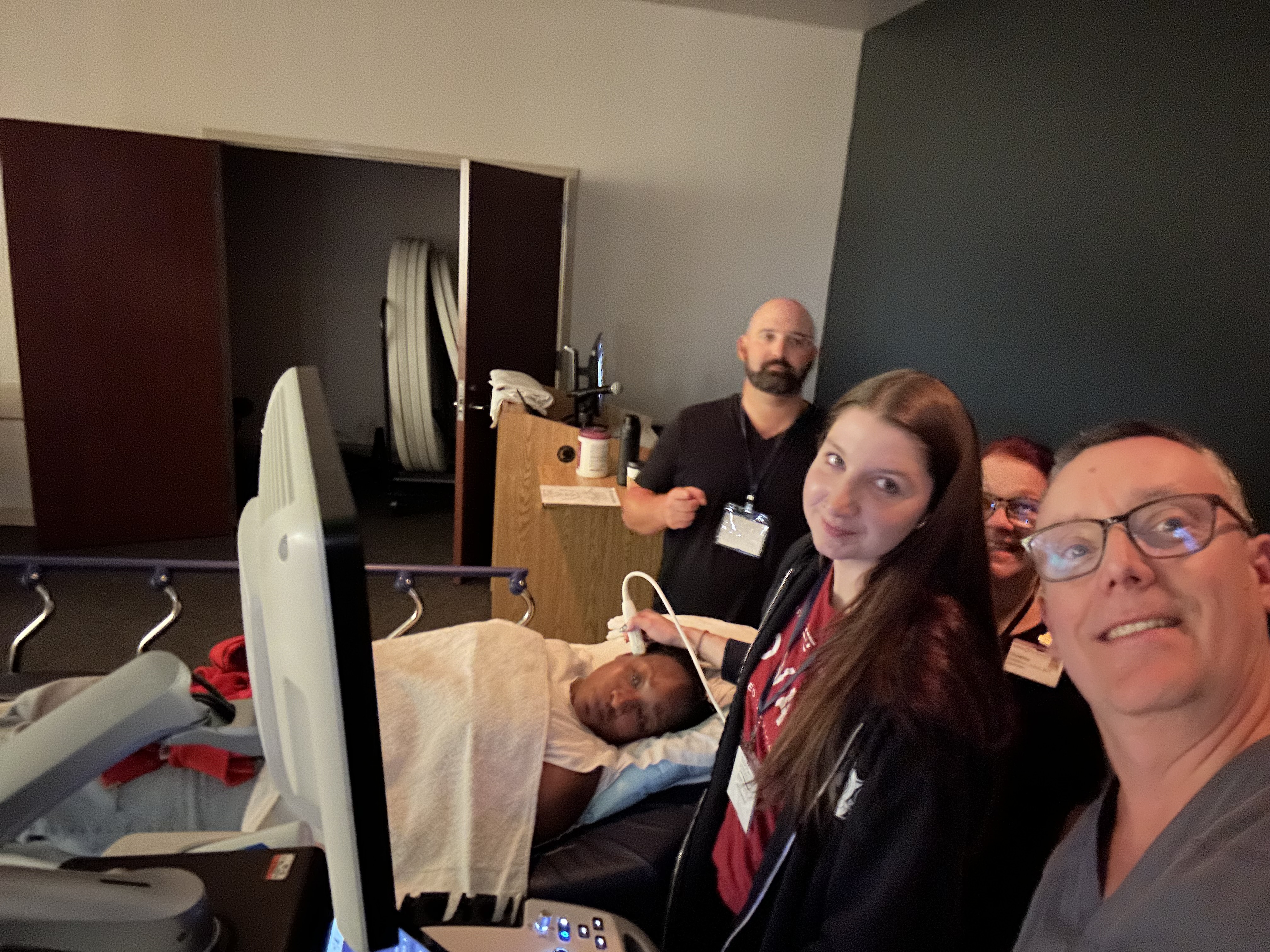
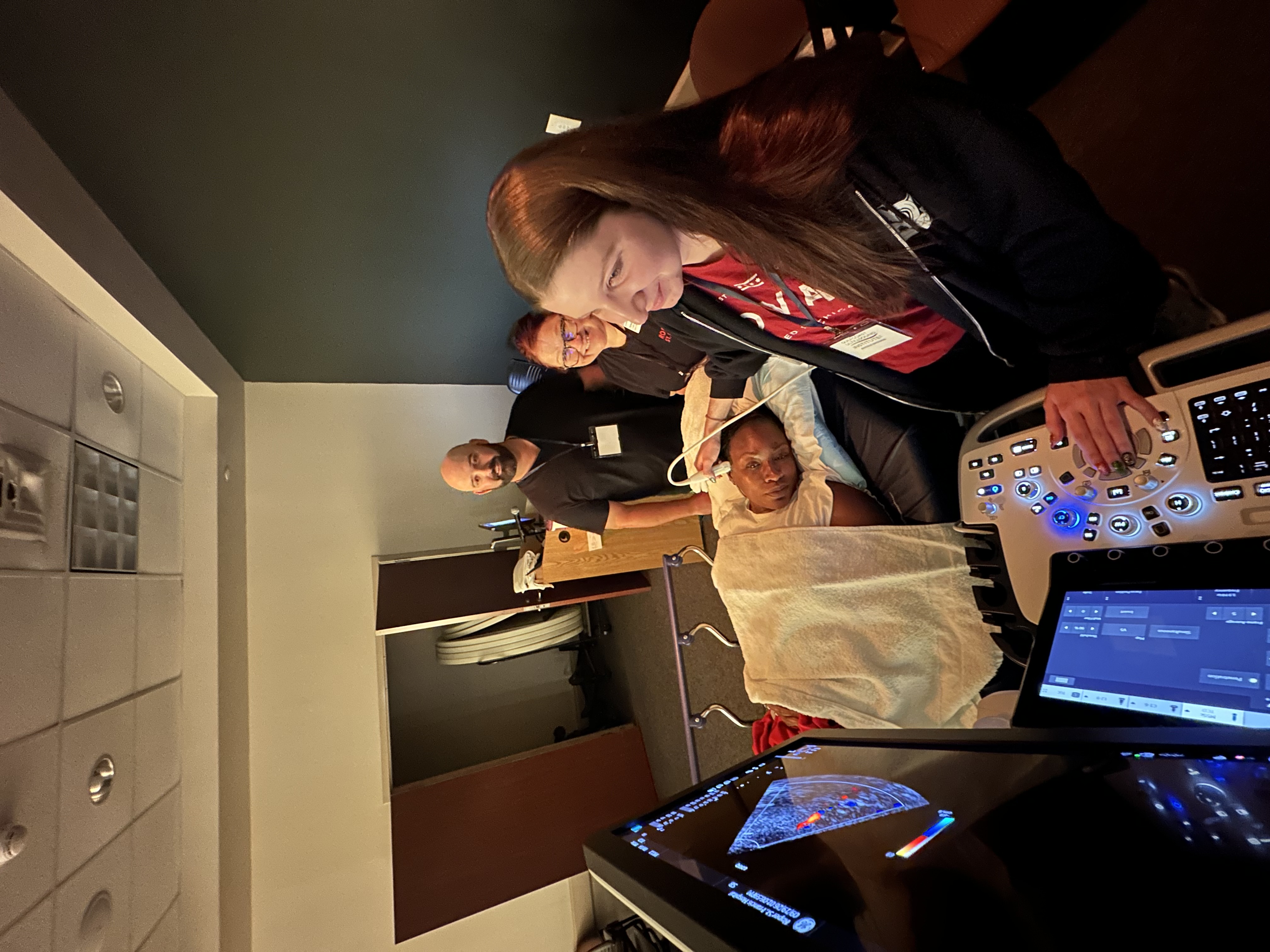
Recently, Gulfcoast Ultrasound Institute (GCUS) had the opportunity to bring hands-on Transcranial Doppler (TCD) ultrasound education directly to participants at Roper Hospital in South Carolina. The onsite training gave participants the opportunity to work alongside experienced ultrasound educators while practicing TCD scanning techniques in their own clinical environment.
The photos from the training show exactly why hands-on education is such an important part of learning ultrasound: participants are at the machine, holding the transducer, identifying acoustic windows, acquiring Doppler signals, and developing the technical skills necessary to perform a systematic examination.
For healthcare organizations looking to expand their cerebrovascular ultrasound capabilities, onsite education can provide a practical way to train a group together while tailoring the experience to the needs of the facility.
What Is Transcranial Doppler Ultrasound?
Transcranial Doppler ultrasound is a noninvasive ultrasound examination used to evaluate blood flow within the brain. Using low-frequency ultrasound transmitted through specific acoustic windows of the skull, TCD allows clinicians to assess blood-flow velocity and direction within major intracranial arteries.
Unlike many other imaging modalities, TCD can provide physiologic information about cerebral circulation without ionizing radiation or contrast material. It can also be performed at the bedside, making it a valuable tool for evaluating and monitoring cerebral hemodynamics in a variety of clinical settings.
According to Cleveland Clinic, TCD may be used to help detect, diagnose, or monitor cerebrovascular conditions including arterial stenosis, emboli, transient ischemic attack (TIA), vasospasm, and stroke risk associated with sickle cell disease, among other applications.
Why Is Transcranial Doppler Ultrasound Important?
One of the strengths of TCD is its ability to provide information about cerebral blood-flow dynamics in real time. Rather than simply producing an anatomical image, Doppler ultrasound evaluates the movement of blood through the intracranial circulation.
This information can be valuable when assessing or monitoring a range of cerebrovascular conditions. Published clinical literature describes TCD applications including monitoring for vasospasm following subarachnoid hemorrhage, evaluation of intracranial stenosis and ischemic cerebrovascular disease, sickle cell disease screening, emboli detection, cardiac shunt assessment, traumatic brain injury, and other neurologic and vascular applications.
Because TCD can be repeated without radiation exposure, it can also be useful when serial examinations are clinically indicated. As with any diagnostic ultrasound examination, its appropriate use and interpretation depend on the clinical situation, examination protocol, and training of the healthcare professional performing and/or interpreting the study.
Why Does Hands-On Training Matter for TCD Ultrasound?
Understanding cerebral vascular anatomy and Doppler principles is only part of learning transcranial Doppler ultrasound. Developing the ability to consistently acquire diagnostic information requires practical scanning experience.
TCD learners must become comfortable locating the appropriate acoustic windows, manipulating the transducer, adjusting depth and Doppler settings, identifying intracranial vessels, recognizing flow direction, and evaluating spectral Doppler waveforms.
That is where hands-on training becomes particularly valuable.
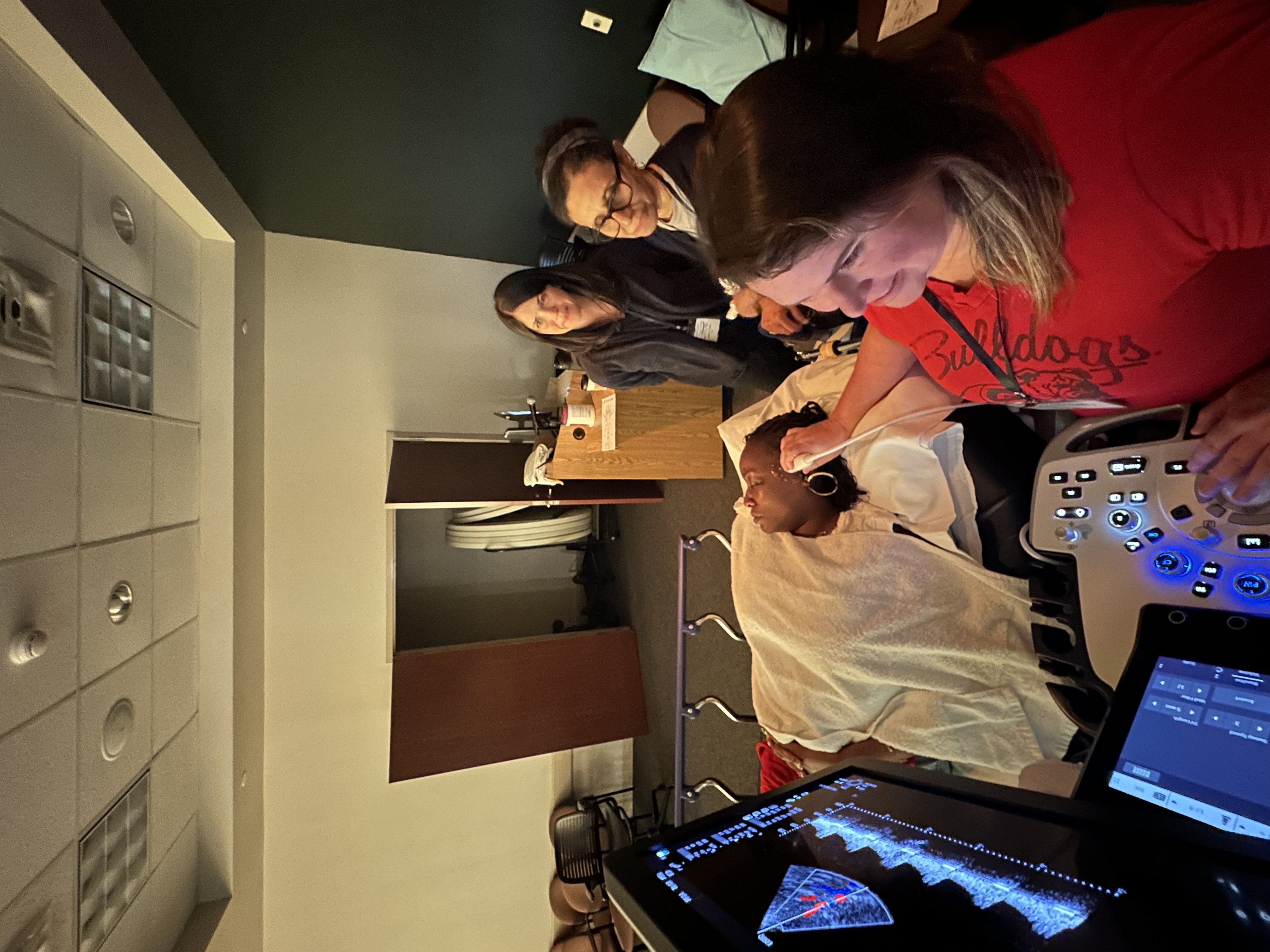
During the recent Roper Hospital onsite, participants were able to put TCD concepts into practice at the ultrasound system while receiving guidance and feedback. This type of interactive education helps connect the concepts learned through lectures and educational materials with the technical skills required to perform an examination.
Bringing Ultrasound Education Directly to Your Facility
The Roper Hospital training is also a great example of what makes GCUS Custom Onsite Ultrasound Education different: instead of requiring an entire group to travel for training, Gulfcoast Ultrasound Institute can bring the education to the organization.
GCUS works with hospitals, medical practices, universities, government organizations, and other healthcare groups to develop customized ultrasound programs based on their educational objectives.
Programs can be structured as a traditional onsite course incorporating live lectures and hands-on scanning, a blended program combining online education with an onsite hands-on workshop, or an interpretation and case-study format. GCUS traditional and blended onsite formats feature a 3:1 participant-to-instructor ratio for hands-on scanning, and programs can be developed for a variety of ultrasound specialties.
For organizations, this approach also provides an opportunity for colleagues to learn together using a curriculum designed around their group's needs.
Explore GCUS Custom Onsite Ultrasound Training
Learn Transcranial Doppler Ultrasound with GCUS
Healthcare professionals who want to develop their TCD skills outside of a custom onsite program can also train through the GCUS Introduction to Transcranial Doppler Ultrasound Blended Course.
The next scheduled blended workshop is July 13, 2027. The course is designed for sonographers, physicians, physician assistants, and other medical professionals learning to perform and/or interpret TCD examinations. The blended format combines self-paced online education with a hands-on scanning workshop, allowing participants to build their foundational knowledge before applying those concepts at the ultrasound system.
GCUS TCD education addresses the fundamental principles needed to perform and interpret transcranial Doppler examinations while helping participants develop the confidence needed to integrate their skills into the clinical environment.
Explore the GCUS Introduction to Transcranial Doppler Ultrasound Blended Course
Advancing Ultrasound Education Through Hands-On Experience
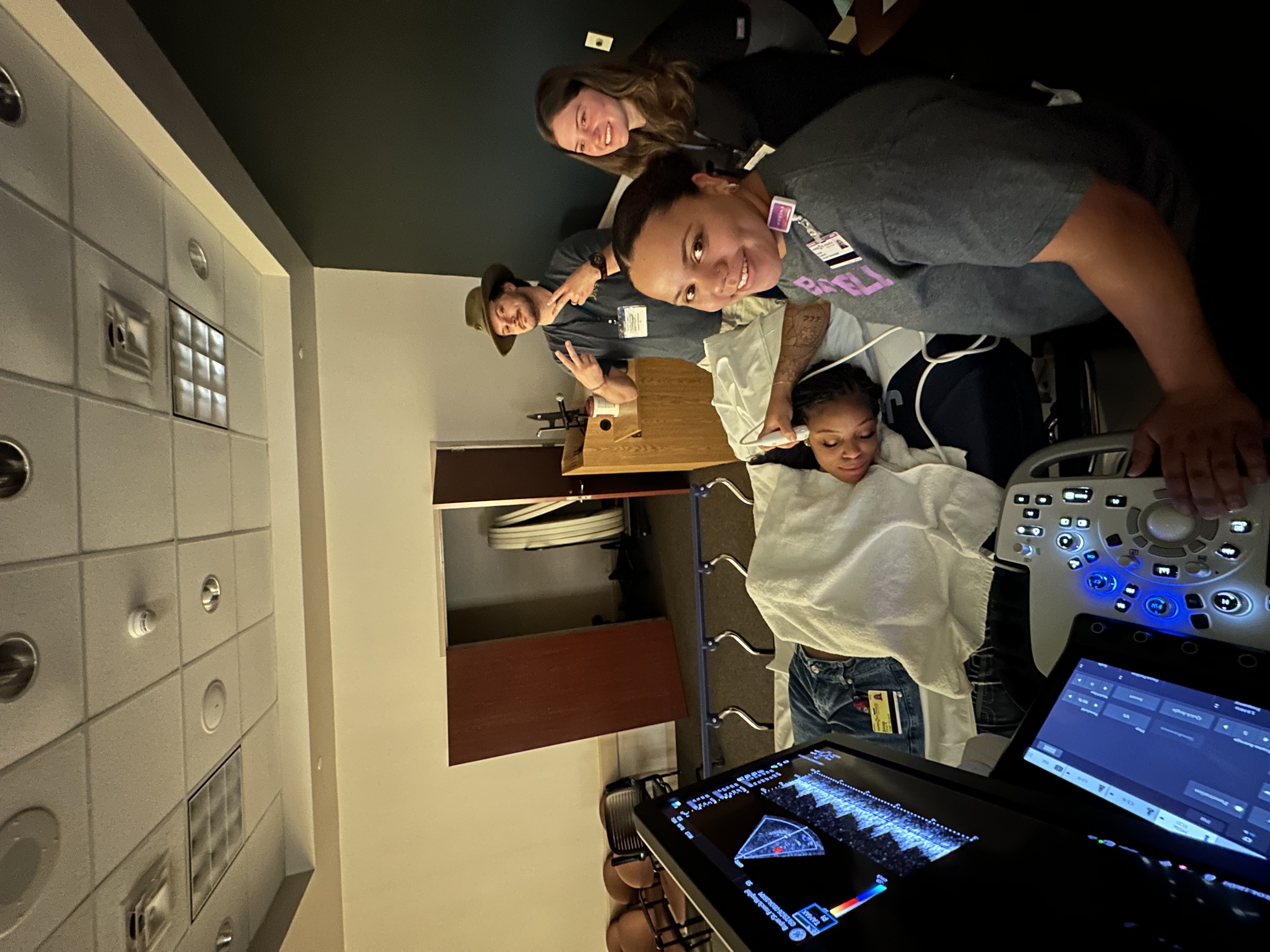
Whether training takes place at the GCUS facility or directly at a hospital through a customized onsite program, hands-on experience remains an essential part of ultrasound education.
The recent TCD onsite at Roper Hospital provided participants with an opportunity to move beyond the fundamentals and practice the technical skills involved in acquiring and optimizing transcranial Doppler examinations with guidance from experienced instructors.
For healthcare organizations interested in expanding ultrasound education across their team, GCUS can customize an onsite program around the applications, experience levels, and educational objectives of the group. Individual learners can also choose from GCUS live, blended, and online ultrasound education options.
Bring GCUS ultrasound education to your facility or join us for an upcoming Transcranial Doppler Ultrasound course to continue building the knowledge and hands-on skills needed for high-quality ultrasound examinations.