
When it comes to ultrasound-guided procedures, even small adjustments can make a big difference. One area that can sometimes challenge clinicians is performing a glenohumeral joint injection. The anatomy of the shoulder is complex, and the convexity of the humeral head often presents a frustrating barrier to clear visualization and an easy needle trajectory. At Gulfcoast Ultrasound Institute, we’re committed to sharing practical, hands-on tips that can make your procedures smoother and more effective. Today’s technique comes courtesy of Dr. Paul Lento, who credits a colleague for inspiring this clever approach. It’s called “setting the sun.”
The Challenge of the Humeral Head
When scanning the posterior aspect of the glenohumeral joint in short axis, the key structures to identify are the humeral head, the glenoid, and the labrum. But in practice, many clinicians find themselves running into the same obstacle: the rounded convexity of the humeral head tends to rise above the glenoid, creating a barrier to both visualization and needle placement. This can make an otherwise straightforward injection feel unnecessarily complicated.
Introducing the “Setting the Sun” Technique
So how do you get around the problem? The solution is surprisingly simple. Instead of fighting the anatomy, you reposition your view. Imagine the humeral head as the sun on the horizon. By applying pressure to the posterior portion of your transducer, the “toe”, you tilt the probe in such a way that the humeral head effectively “sets.” This slight angulation shifts the convexity out of the way, opening up a clear trajectory for your injection from lateral to medial.
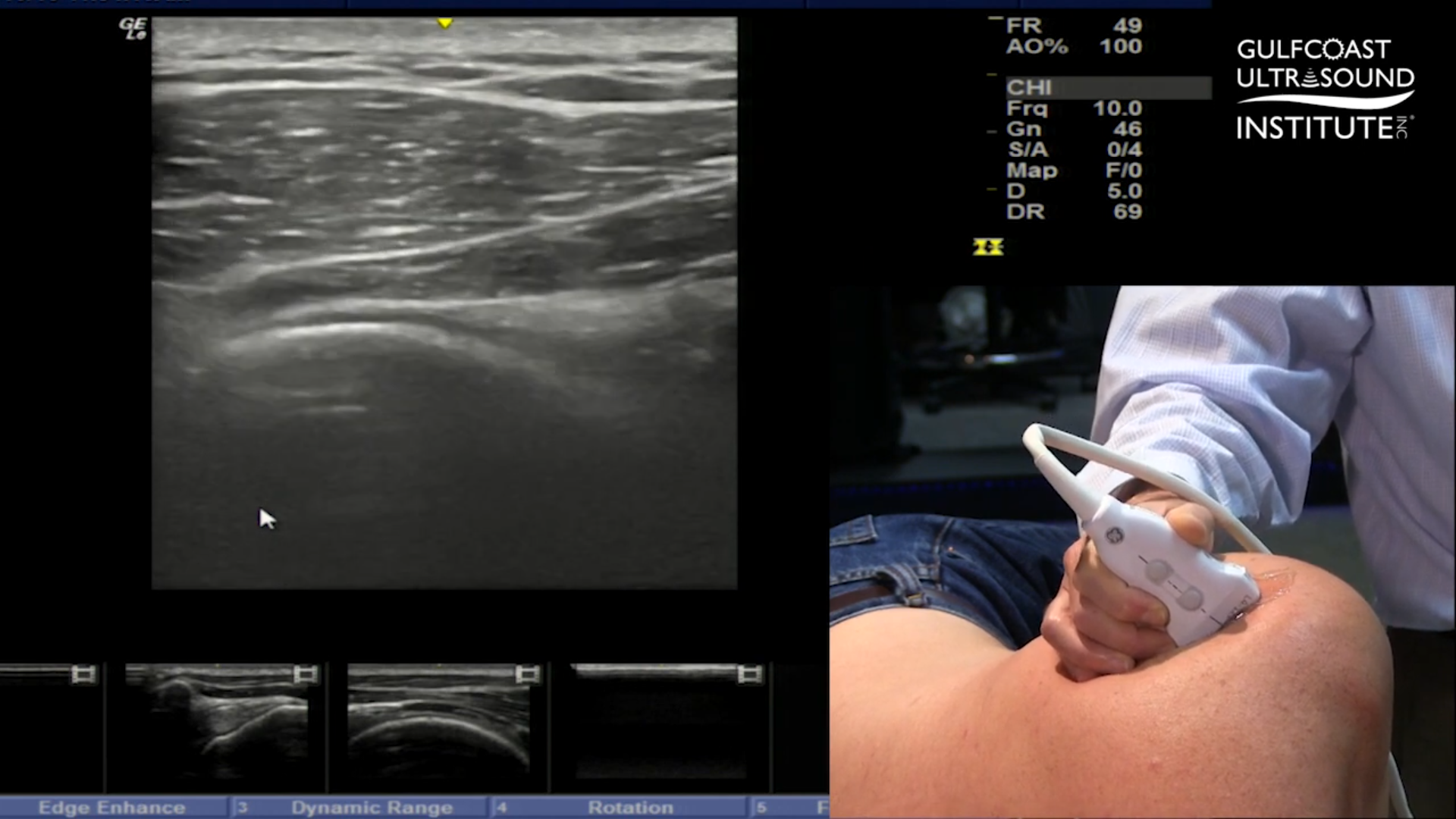
What This Feels Like for the Patient
Whenever you’re adjusting probe pressure, it’s worth explaining to the patient what they might feel. In this case, the maneuver requires pushing in slightly on the more posterior portion of the transducer. The patient may notice some additional pressure during this adjustment, but reassuring them that this is normal and brief can help maintain comfort and trust during the procedure.
Why This Technique Works
By tilting the probe to “set the sun,” you’re not changing the anatomy; you’re simply changing your angle of visualization. This small tweak eliminates the humeral head’s obstruction and provides a more favorable view of the posterior glenohumeral joint. The improved alignment makes the needle path more straightforward, reduces frustration, and enhances accuracy. For clinicians, it’s a reminder that sometimes the best solutions come down to understanding your tools and making smart adjustments.
Bringing It All Together
Performing ultrasound-guided glenohumeral joint injections doesn’t need to be a struggle with blocked views and awkward trajectories. By adopting the “setting the sun” technique, you can make your workflow smoother and more effective while improving patient comfort. Like many procedural skills, mastery comes with practice, but incorporating these practical tips helps build both confidence and consistency.
Ready to Learn More?
At Gulfcoast Ultrasound Institute, we specialize in providing the highest quality training for clinicians looking to sharpen their ultrasound skills. Whether you’re learning joint injections, vascular access, or advanced musculoskeletal applications, our expert instructors and hands-on courses give you the tools you need to succeed in real-world practice.
Call the Gulfcoast Ultrasound Institute at 727-363-4500 for all of your ultrasound training needs. We’re conveniently located at 111 2nd Ave NE, #800, St. Petersburg, FL 33701.