Ultrasound guided vascular access is a skill that takes practice, patience, and a few smart techniques along the way. One of the most common frustrations for new learners is keeping the target vessel centered on the screen, especially when transitioning between short axis and long axis views. If you have ever felt confident you were right on target, only to lose the vessel as soon as you rotate the transducer, you are not alone. This challenge is incredibly common and completely normal in the learning process.
A Common Learning Challenge in Vascular Access
When first learning ultrasound, many students struggle with spatial awareness on the screen. During vascular access, this usually shows up when rotating from a short axis view of a blood vessel to a long axis view. As the probe turns, even a small shift can cause you to slip off the vessel entirely. Once that happens, it can feel like you are starting over, searching and rescanning just to relocate your target. This not only slows you down but can also increase frustration and reduce confidence during procedures.
Why Staying Centered Matters
Keeping your target vessel centered is critical for accuracy and safety. When the vessel drifts off screen, it becomes harder to track needle placement and maintain proper alignment. Staying centered allows you to move smoothly between views while maintaining continuous visualization of the anatomy. The good news is that there is a simple tool already built into your ultrasound machine that can help you do exactly that.
A Simple Hot Tip Using “M” Mode
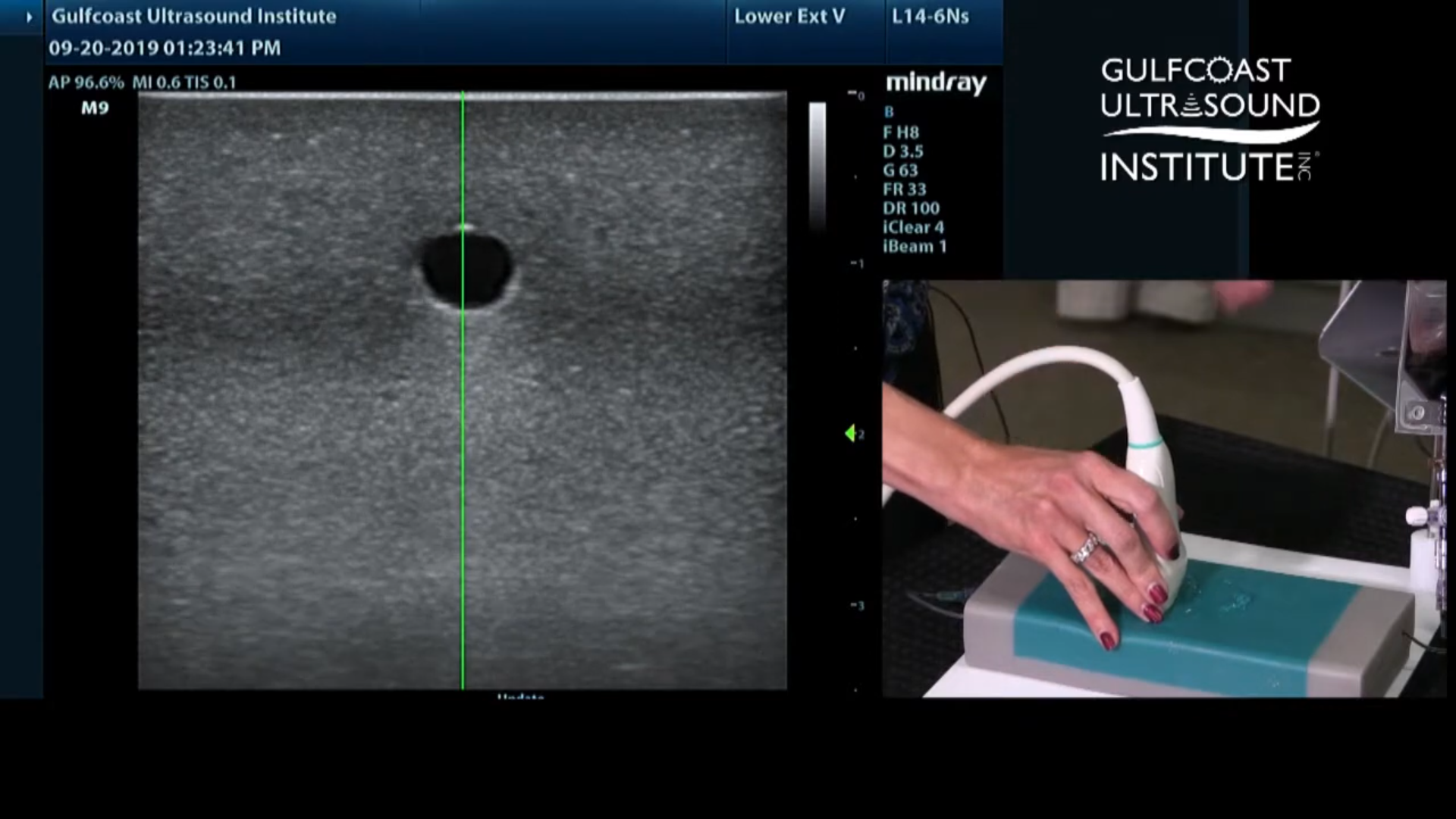
One effective technique for staying centered during probe rotation is using “M” mode. Most ultrasound machines have an “M” button that is easy to access. When you tap “M” mode, the machine places a vertical line directly in the center of your ultrasound image. This line becomes a visual guide that helps you stay locked onto your target.
To use this technique, first identify your target vessel in the short axis. Once you have it clearly visualized, line the vessel up with the “M” mode line in the center of the screen. This is your reference point. As you begin to rotate the transducer toward a long axis view, your goal is to keep the vessel aligned with that center line the entire time.
How to Rotate Without Losing Your Target
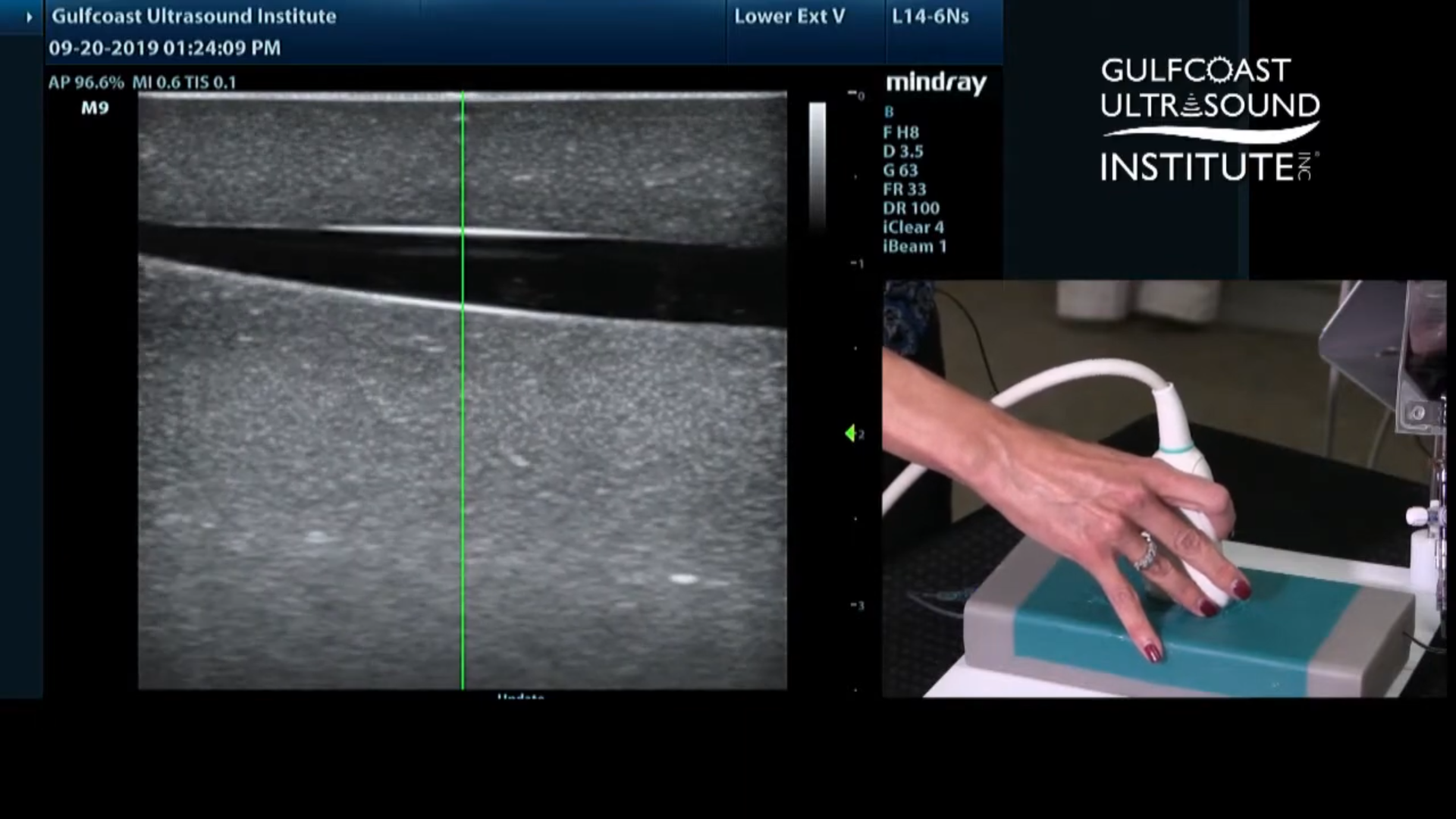
As you gently rotate the transducer, stabilize your hand to maintain control. Many providers find it helpful to anchor with their non-scanning hand for added stability. Move slowly and deliberately. Watch the vessel closely as you rotate. If at any point the vessel drifts off the “M” mode line, stop the rotation. Recenter the vessel back onto the line before continuing. This pause and recenter approach prevents you from fully losing the target and saves time in the long run.
Once you complete the rotation while staying on the center line, you should land directly back on your target in the new view. This method helps build consistency and muscle memory, making transitions between views smoother and more reliable with practice.
Building Confidence Through Practice
Using the “M” mode line as a guide is a simple adjustment, but it can make a big difference in how confident and efficient you feel during vascular access procedures. Like any ultrasound skill, repetition is key. Practicing this technique on phantoms and during supervised scans helps reinforce proper hand movements and visual tracking. Over time, you will find yourself losing the target less often and moving more fluidly between views.
Now It Is Your Turn to Scan
Ultrasound is a hands-on skill, and small tips like this can have a big impact on your learning curve. If you are looking to strengthen your ultrasound skills, gain confidence, or receive expert guidance from experienced instructors, professional training makes all the difference.
Call the Gulfcoast Ultrasound Institute at Ph: 727-363-4500 for all of your ultrasound training needs. We are conveniently located at 111 2nd Ave NE, #800, St. Petersburg, FL 33701. Our team is here to help you learn, practice, and succeed every step of the way.